- Ecobrief
- Posts
- 💡 Psst... Your Netflix habit vs. two cups of tea? Surprising math! #30
💡 Psst... Your Netflix habit vs. two cups of tea? Surprising math! #30

Ecobrief
February 02, 2026
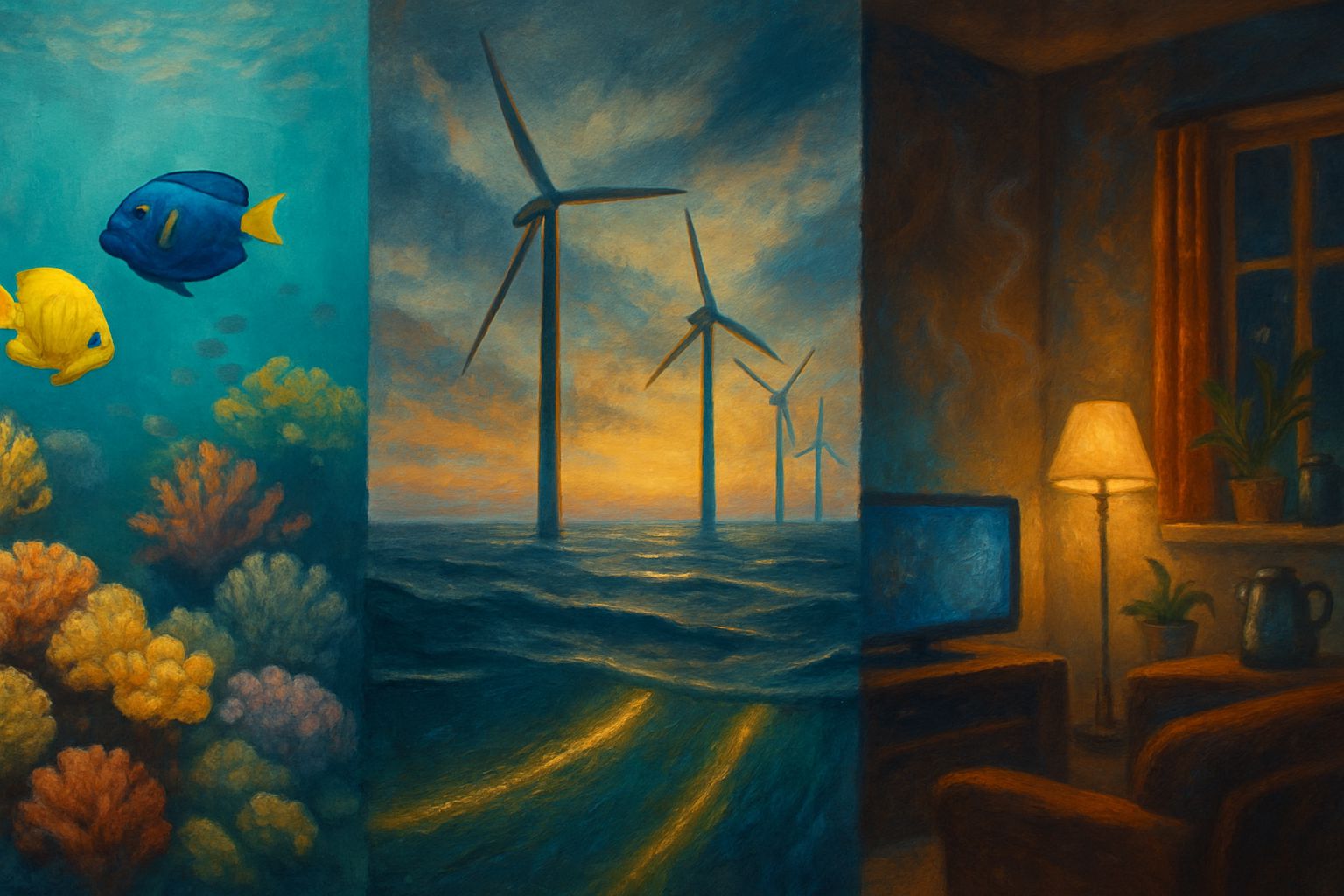
This week, the future got a little greener with breakthroughs on land and sea, and even at home. Mauritius has revived damaged coral reefs with heat-resistant corals that survived at a stunning 98% rate, defying the odds during mass bleaching events. Across the North Sea, ten European countries, led by the UK, agreed to build a massive wind grid poised to supply clean energy to 143 million homes.
Meanwhile, if you’ve ever wondered about your Netflix habit, here’s a surprise: streaming just one hour of video emits 55 grams of CO₂, about as much as boiling water for a couple of teas. Want to really cut your carbon? Our Deep Dive busts common energy myths and reveals simple changes you can make for big climate wins. ⬇️
🌍 Heat-Resistant Corals Revive Reefs
Key initiative: Mauritius has successfully cultivated heat-resistant corals with a 98% survival rate to restore bleached reefs.
In response to severe coral bleaching events, Mauritius has advanced coral restoration by breeding heat-resistant corals. Dr. Nadeem Nazurally's team focused on naturally breeding corals that can withstand higher temperatures. During a recent bleaching event, while wild reefs experienced up to 80% bleaching, these cultivated corals achieved a 98% survival rate. The breeding process involves collecting coral eggs and sperm during synchronized spawning events, then nurturing them in protected nurseries. This method selects for corals with phenotypes that thrive in warmer waters. The success of this initiative offers a promising strategy for preserving marine biodiversity and supporting local fisheries, which are vital to Mauritius' economy. (goodnewsnetwork.org)
Quantified benefit: Achieved a 98% survival rate in heat-resistant corals during bleaching events.
🌍 UK Joins 100GW North Sea Wind Grid
Key initiative: The UK and nine other European countries have agreed to build a 100GW offshore wind power grid in the North Sea.
In a landmark agreement, the UK, along with Belgium, Denmark, France, Germany, Iceland, Ireland, Luxembourg, the Netherlands, and Norway, plans to transform the North Sea into a major clean energy hub. The initiative involves constructing offshore wind farms connected to multiple nations via high-voltage subsea cables, aiming to generate 100GW of wind power, enough to supply electricity to 143 million homes. This collaborative effort underscores a commitment to reducing reliance on fossil fuels and advancing renewable energy infrastructure. (theguardian.com)
Quantified benefit: Plans to generate 100GW of offshore wind power, supplying electricity to 143 million homes.
🌍 Streaming Video's Carbon Footprint Unveiled
Key discovery: Streaming one hour of video generates approximately 55 grams of CO₂ emissions.
As video streaming becomes ubiquitous, its environmental impact is gaining attention. Research indicates that streaming one hour of video produces about 55 grams of CO₂, comparable to boiling water for a few cups of tea. While individual emissions are modest, the cumulative effect is significant. For instance, in 2024, Netflix users streamed 94 billion hours of content, resulting in approximately 5.17 million metric tons of CO₂ emissions, equivalent to driving 18.6 billion miles in a gasoline-powered car. The majority of these emissions stem from the energy consumption of user devices and home networking equipment. To mitigate this impact, consumers can opt for energy-efficient devices, reduce streaming quality, or download content for offline viewing. (earth911.com)
Quantified benefit: Streaming one hour of video generates approximately 55 grams of CO₂ emissions.
📖 Deep Dive: Busting the Myths of Energy Consumption
By demystifying common misconceptions about how we use energy, we can make smarter, more effective choices that truly reduce our carbon footprint and energy bills.
1. Problem Solved (The Big Idea):
This busts the myth that small, individual actions are insignificant, revealing how seemingly minor habits collectively contribute to massive energy waste.
2. The Myth of "Phantom Power" (A Food Metaphor):
One of the most persistent myths is that turning off your appliances is enough. But what about the power they consume on standby? This is often called "phantom" or "vampire" power. How can something that's "off" still use energy? Think of it like a chef keeping a pot of water on a back burner, just simmering but never boiling. The burner isn’t at full blast, but it's constantly using a little bit of gas to keep the water warm and ready. Most modern electronics, your TV, coffee maker, microwave, and chargers, do the exact same thing. They remain in a standby mode so they can power on quickly, receive remote signals, or display a clock. That constant state of "readiness" quietly sips energy, 24/7. Individually, each device's consumption is tiny, but collectively, it's like leaving dozens of tiny burners simmering in your house all day and night.
3. Global Potential (The Sobering Metrics):
The scale of this "phantom load" is astonishing. Standby power is responsible for about 5-10% of residential electricity use in developed countries. In the United States alone, this equates to the annual output of dozens of large power plants and costs consumers more than $19 billion annually. If every household took simple steps to unplug devices or use smart power strips that cut off power completely, the collective energy savings would be immense, preventing millions of tons of CO2 from entering the atmosphere each year. This isn't just about saving a few dollars; it's about shutting down a significant and unnecessary source of national energy demand.
4. Wisdom from the Source:
As the U.S. Department of Energy succinctly puts it: "Taken together, the electricity consumed by all of these inactive devices can add up to a significant amount of wasted energy and money."
Why is this important for you?
It’s easy to hear statistics like this and feel a bit defeated. "My phone charger's tiny light bulb isn't the problem," you might think, "the real issue is big industry!" And you're not wrong, but this is where our "salad and the gym" analogy fits perfectly. Tackling phantom power is like deciding to cut out sugary sodas. It’s a simple, foundational change. On its own, will it make you a marathon runner? No. But it stops a source of "empty calories" and builds the exact kind of mindfulness that leads to bigger changes, like eating the salad (choosing a green energy provider) and hitting the gym (advocating for better climate policy). When millions of us stop these small, unnecessary energy drains, we create a massive, measurable shift in demand, proving that our collective habits are a powerful force for change.
Search Sources
➡️ ecofriend.com
➡️ uswitch.com
➡️ iae.org
➡️ energy.gov
➡️ constellation.com
➡️ nytimes.com
💡 5 Quick Wins
🧺 Dry laundry with a dehumidifier + rack (skip the tumble dryer): Saves ~150–400 kWh and 30–100 kg CO₂e
Set up a clothes rack in a small room, door closed, dehumidifier at 45–55% RH. One mid‑range unit uses ~150–250 W but shortens drying time dramatically compared with passive indoor drying, and uses far less energy than most vented/condensing dryers. February humidity is high indoors from showers and cooking; this method dries clothes, prevents mold, and cuts energy.
🚿 Fit a low‑flow showerhead (6–8 L/min) + 5‑minute timer: Saves ~500–1,200 kWh heat and 100–250 kg CO₂e per person
Hot water is hidden heating. A modern aerating head halves flow without feeling cold; add a simple sand timer or phone reminder. Warmer bathroom, lower bills, and less condensation on winter windows.
🌬️ “Burst‑ventilate,” don’t trickle‑tilt: Saves ~3–7% space‑heating
Open opposite windows fully for 3–5 minutes, 2–3 times/day, then close. Use a €20–€40 CO₂/humidity meter to time it (aim CO₂ < 1,000 ppm, RH 40–55%). You flush stale, damp air fast without chilling walls, unlike tilted windows that leak heat all day in February.
🪜 Insulate and seal the loft/attic hatch: Saves ~60–180 kWh and 15–40 kg CO₂e
Add an insulated hatch cover or DIY box with rigid foam (≥50 mm) and stick-on weatherstrip around the frame; tape visible gaps. The “chimney effect” is strongest in cold months, plugging this one square meter stops a surprising amount of warm air escaping.
📺 Kill standby with a smart power strip (TV, soundbar, console): Saves ~40–120 kWh and 10–30 kg CO₂e
Set auto‑off after 10–15 minutes idle; one click powers the whole media cluster. Many winter evenings = many standby hours. Vampire loads can be 5–10% of household electricity; February’s long nights make the media stack the prime suspect.
Quote of the Week
"[He wants the North Sea to become the] ‘largest reservoir of clean energy worldwide’.", Friedrich Merz, Chancellor of Germany, leading one of Europe’s largest economies and a major driver of EU energy and climate policy.
🌱 February 2nd, Groundhog Day! While Punxsutawney Phil is busy predicting weather patterns, here's a prediction we can all get behind: sharing hope never goes out of season. Think of it like planting seeds of optimism, you might not see the immediate bloom, but somewhere, someone's day is getting a little brighter because of you. It's the kind of ripple effect that doesn't require a furry meteorologist to forecast.